Saturday, May 24, 2014

Swinging Song

Baby in a Swing


When my grandchildren were tiny, I had the cutest baby swing. It was molded plastic and it had a safety bar across the front to hold them in. 

I hung my swing inside a screened-in porch, so mosquitoes wouldn't be a nuisance if the baby fell asleep --like they usually did.

One afternoon as I was swinging a grandson, I started to hum to the gentle motion of the swing.  He started to nod and as the motion of the swing slowed, I also adjusted my humming softer and slower to keep with the motion of the swing.

Later, I added words to the melody and what resulted is the following song.   I miss those days ...


Swinging Song


Bye oh bye up, 

bye oh bye down. 

bye oh bye feet, 

way off the ground.


Swing-ing, swing-ing, 

I love swing-ing. 


Bye oh bye high, 

bye oh bye low. 

Bye oh bye faster, 

look at me go. 


Swing-ing, swing-ing, 

I love swing-ing. 


Bye oh bye fly-ing 

up to the sky. 

Bye oh bye push me 

higher than high. 


Swing-ing, swing-ing, 

I love swing-ing. 


Bye oh bye eyes 

are closing now 

bye oh bye head 

is nodding down 


Swing-ing, swing-ing, 

I love swing-ing. 


(whispering as  swing slows down)


Bye oh bye gent-ly, 

bye oh bye slow. 

Bye oh bye, sh-h-h-h-h . . . 

to    sleep    I    go. 


Swing-ing, swing-ing, 


love


swing-ing.


[From the Book, Me Too! Preschool Poetry, by CJ Heck]


“A writer soon learns that easy to read is hard to write.” ~CJ Heck

Friday, May 23, 2014

Daddy's Boots


Daddy's Boots 

Daddy left his boots for me 
and here I have to stay, 
'cause daddy is a soldier. 
I'm in charge while he's away. 

In daddy's boots, I can pretend
that now I am the man 
who does the things that daddy does 
as only daddy can. 

I help with little brother, 
I help with folding clothes, 
I help to set the table, 
and I hope daddy knows
that every day I wear his boots 
so I'll feel close to him 
and I try and keep mom happy, 
till he comes home again. 

I know that he's protecting us, 
that's what soldiers do, 
but his boots are way too big for me, 
and my job being him is, too. 

When is daddy coming home? 
I miss him all the time. 
 Mom said daddy's proud of me 
... and his boots fit me just fine.


[From CJ's Book, Barking Spiders 2]


“A writer soon learns that easy to read is hard to write.” ~CJ Heck

Thursday, May 22, 2014

The History of the Poppy for Memorial Day

Poppy:  The Flower of Remembrance 


In Flanders Fields 
by John McCrae 

In Flanders fields the poppies blow
Between the crosses, row on row,
That mark our place; and in the sky
The larks, still bravely singing, fly.
Scarce heard amid the guns below.

We are the dead. Short days ago
We lived, felt dawn, saw sunset glow
Loved, and were loved, and now we lie
In Flanders fields.

Take up our quarrel with the foe:
To you from failing hands we throw
The torch; be yours to hold it high.
If ye break faith with us who die
We shall not sleep, though poppies grow
In Flanders fields.


This poem was written by World War I Colonel John McCrae, a surgeon with Canada's First Brigade Artillery. It expressed McCrae's grief over the "row on row" of graves of soldiers who had died on Flanders' battlefields, located in a region of western Belgium and northern France. The poem presented a striking image of the bright red flowers blooming among the rows of white crosses and became a rallying cry to all who fought in the First World War. The first printed version of it reportedly was in December 1915, in the British magazine Punch.

McCrae's poem had a huge impact on two women, Anna E. Guerin of France and Georgia native Moina Michael. Both worked hard to initiate the sale of artificial poppies to help orphans and others left destitute by the war. By the time Guerin established the first sale in the U.S., in 1920 with the help of The American Legion, the poppy was well known in the allied countries — America, Britain, France, Canada, Australia and New Zealand — as the "Flower of Remembrance." Proceeds from that first sale went to the American and French Children's League.

Guerin had difficulty with the distribution of the poppies in early 1922 and sought out Michael for help. Michael had started a smaller-scaled Poppy Day during a YMCA conference she was attending in New York and wanted to use the poppies as a symbol of remembrance of the war. Guerin, called the "Poppy Lady of France" in her homeland, and Michael, later dubbed "The Poppy Princess" by the Georgia legislature, went to the Veterans of Foreign Wars (VFW) for help. Following its first nationwide distribution of poppies, the VFW adopted the poppy as its official memorial flower in 1922.

However, a shortage of poppies from French manufacturers led to the idea of using unemployed and disabled veterans to produce the artificial flowers. In 1924, a poppy factory was built in Pittsburgh, Pa., providing a reliable source of poppies and a practical means of assistance to veterans. Today, veterans at VA medical facilities and veterans homes help assemble the poppies, which are distributed by veterans service organizations throughout the country.

Donations received in return for these artificial poppies have helped countless veterans and their widows, widowers and orphans over the years. The poppy itself continues to serve as a perpetual tribute to those who have given their lives for the nation's freedom.


“A writer soon learns that easy to read is hard to write.” ~CJ Heck

Tuesday, May 20, 2014

If Love Had Not Called Me


If Love Had Not Called Me

by Robert S. Cosmar

To CJ:
I would never have known you, 
if love had not called me. 
The mystery between us 
would be forever unsolved.
Like strangers never to meet, 
my life would have been empty 
of all joy without you.
An outcast to my own heart, 
I would have been 
as one who was banished 
from the kingdom of love 
and left unfulfilled.
You have completed me. 
You brought my love 
out where I can see it 
and made me the man 
I was meant to become.

Yours forever,
Robert


[Robert Cosmar is a published writer, blogger, astrologer, and the Author of four books which focus on Awareness.]


“A writer soon learns that easy to read is hard to write.” ~CJ Heck

Monday, May 19, 2014

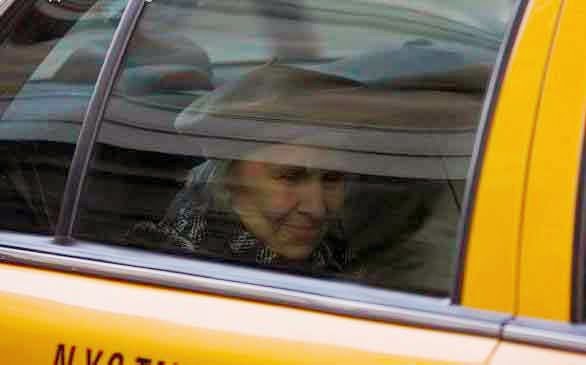
The Taxi Ride


I arrived at the address and honked the horn. After waiting a few minutes, I walked up to the door and knocked. "Just a minute", answered a frail, elderly voice.

I could hear something heavy being dragged across the floor. After a long pause, the door opened. A small woman in her 90's stood before me. She was wearing a print dress and a pillbox hat with a veil pinned on it, like someone out of a 1940's movie. By her side was a small nylon suitcase.

The apartment looked as if no one had lived in it for years. All the furniture was covered with sheets. There were no clocks on the walls, no knickknacks or utensils on the counters. In the corner was a cardboard box filled with photos and glassware.

"Would you carry my bag out to the car?" she asked.

I took the suitcase to the cab, then returned to assist the woman. She took my arm and we walked slowly toward the curb. She kept thanking me for my kindness. "It's nothing", I told her. "I just try to treat my passengers the way I would want my own mother treated.

"Oh, you're such a good boy", she said. 

When we got into the cab, she gave me an address and then asked, "Could you drive through downtown?"

"Ma'am, it's not the shortest way," I answered quickly.

"Oh, I don't mind," she said. "I'm in no hurry. I'm on my way to a hospice."

I looked in the rear view mirror. Her eyes were glistening. "I don't have any family left," she continued in a soft voice. "The doctor says I don't have very Long."

I quietly reached over and shut off the taxi's meter. "What route would you like me to take?" I asked.

For the next two hours, we drove through the city. She showed me the building where she had once worked as an elevator operator. 

We drove through the neighborhood where she and her husband had lived when they were newlyweds. 

She had me pull up in front of a furniture warehouse that had once been a ballroom where she had gone dancing as a girl. 

Sometimes, she'd ask me to slow down in front of a particular building, or corner, and she would sit staring into the darkness, saying nothing.

As the first hint of sun was creasing the horizon, she suddenly said, "I'm tired. Let's go now."

We drove in silence to the address she had given me. It was a low building, like a small convalescent home, with a driveway that passed under a portico. 

Two orderlies came out to the cab as soon as we pulled up. They were solicitous and intent, watching her every move. They must have been expecting her. 

I opened the trunk and took the small suitcase to the door. The woman was already seated in a wheelchair.

"How much do I owe you?" She asked, reaching into her purse.

"Nothing," I said

"You have to make a living," she answered.

"There will be other passengers," I responded.

Almost without thinking, I bent and gave her a hug. She held onto me tightly.

"You gave an old woman a little moment of joy," she said. "Thank you."

I squeezed her hand gently, and then walked into the dim morning light. Behind me, a door shut. It was the sound of the closing of a life.

I didn't pick up any more passengers that shift. I drove aimlessly, lost in thought. 

For the rest of that day, I could hardly talk. What if that woman had gotten an angry driver, or one who was impatient to end his shift? What if I had refused to take the run, or had honked once, then driven away?

On a quick review, I don't think that I have ever done anything more important in my life. We're conditioned to think that our lives revolve around great moments. But great moments often catch us unaware, beautifully wrapped in what others may consider a small one.

[Author Unknown]

“A writer soon learns that easy to read is hard to write.” ~CJ Heck

Sunday, May 18, 2014

"Desolation Row": by Kay Kendall

Stairway Press
258 pages
Format:  Kindle, Paperback, Audible


About the Book:

The Cold War was the background theme of my childhood. An intercontinental ballistic missile was housed in a silo on the outskirts of my hometown.

The Vietnam War made my life’s course swerve, even though I didn’t fight.

In my debut mystery, “Desolation Row”, I treat that era as long-gone history, inspired by my favorite suspense stories set during World Wars I and II.

Oh yes, and my heroine, Austin Starr, turns into an amateur sleuth, motivated by reading too many Nancy Drew tales. After all, someone has to get her young husband, David Starr, released from jail.

The time—1968. The place—Toronto, Canada, where the Mounties are sure David murdered a US Senator’s son.


Reviews:

"A brutal murder, a young woman fighting to prove her husband's innocence--DESOLATION ROW hooked me on page one. Author Kay Kendall knows how to burrow into your heart." ~~Author Norb Vonnegut

“A smart mystery … The clever structure, remarkable dialog, and subplots result in a wholly satisfying read. Packs a considerable punch. … Readers will look forward to seeing more of Kendall, with her formidable intellect, tart sense of humor, and resolute sense of justice. Unexpectedly magnificent. The author has written a story that engages you in the characters first and the mystery is the subplot.” ~MaryAnn Koopman

“The author is to be commended on two fronts. First, she's told a very absorbing story, and second, she's told it very well. When thinking about her writing style, the word "fluid" comes to mind. And, I can think of no better compliment to any writer!” ~Howard R.

“Desolation Row is a winner. The reader feels empathy for this displaced Texan struggling with the Canadian way of life while supporting her desire to try-out some CIA-investigative skills. Fast moving. And great characters. Enjoy!” ~Judi

“The book was very well written with likeable characters including a fast paced plot. It really gave off the air of living in those times when America was at war with itself. I highly recommend this book and look forward to reading more from this author!” ~Deb Krenzer

“I'm not a huge mystery fan, but this one caught and held my attention from the beginning…” ~G. Miller

“From the first page to the last, Kendall proves herself adept at weaving sinister suspense, painting backdrops so realistic you can feel the chill of Canadian winds and smell the cloying aroma of marijuana, and keeping all of Austin's sleuthing techniques within the realms of plausibility…” ~Christina Hamlett

“My husband and I both read this book at the same time. When either of us would put the Kindle down, the other one would grab it. We had continueing discussions over "who dunnit" going back and forth between several of the characters as new clues and story line twists were added.” ~Amy Rosson

“Captivating from the beginning! I loved it!” ~Carolyn Beall

Kay Kendall

About the Author

Kay Kendall grew up in the bucolic Flint Hills of Kansas but dreamt of returning to her father’s ancestral home of Texas and also of becoming a latter-day Nancy Drew or John le Carré.

Instead, higher education and circumstance led her down a long and winding road (footnote, the Beatles) to graduate studies in history at Harvard, to Canada, international corporate communications, work in Russia, and finally, finally, her beloved Texas.

In the spring of 2013, assisted by Stairway Press, she leapt in the direction of Nancy Drew and le Carré with publication of her debut historical mystery, “Desolation Row”.

Now Kay is writing her second Austin Starr mystery, “Rainy Day Women”, at her Texas home shared with her husband Bruce, Wills, their cavalier King Charles spaniel, plus five house rabbits. Her next aspiration is to become an author able to say she “lives part-time in the Cotswolds,” an anglophile’s version of her upbringing.


“A writer soon learns that easy to read is hard to write.” ~CJ Heck
Saturday, May 17, 2014

Morels: Tis The Season

Photo credit: Chris Matherly

There’s just something about morels that drives people to madness.

That’s according to Chris Matherly, a self-described “morel obsessive,” who we spoke to when he was midway through a four-month-long hunt, chasing the hard-to-find mushroom from Georgia to Washington State.

Matherly left his Kennesaw, Georgia home in late March; he won’t return until early July, at the tail end of the morel growing season.

Because they’re elusive, “there’s something about the morel mushroom that just drives people crazy,” Matherly explained. “They get addicted.”

Even among the curious-looking oddballs of the mushroom kingdom, the morel sticks out. With its tall, honeycombed cap, it has the look of a Martian roe sac. Its unique appearance is both a blessing and a curse: There’s little chance of confusing a morel with any other mushroom (including a poisonous one), but its shape and coloring blend effortlessly into its forest-floor surroundings, making it difficult to spot.

Once located, however, the morel is a treat. “The flavor of them is just so unique, kind of nutty and earthy,” Matherly mused.

Among its fans are the hordes who follow Matherly into the woods at each stop along his morel-chasing route. Over the course of his trip, Matherly will host at least 10 guided morel hunts, each with a group of up to 30 fervid mushroom hunters. 

Matherly organizes the trips through his website, Morel Mushroom Hunting Club, which he started in 1999 and which boasts roughly 1,500 members. He says he’s booked solid through the fall. (During the year, Matherly hosts up to 50 foraging trips for other mushrooms and herbs.)

Morels can be found all over the United States, and each region’s season typically lasts for three or four weeks. The warmer the area, the earlier its morel season begins, Matherly explained. In Georgia, the first morels spring up in late February. By April, morels are beginning to sprout up the East coast, all the way up to Vermont. In May, they’re in northern Michigan, Oregon, and Washington.

All told, morels can be found somewhere in America right through the end of August. If you’re interested in finding some of your own, do your research and check Matherly’s Mushroom Report, which compiles morel sightings all over the country. (Right now, Ohioans, you’re in luck!)

Morels generally like to grow in the shady earth near the roots of trees, Matherly said. The type of tree depends on the region: In the flood plains of the Southeast, morels grow under ash trees. In the Midwest, they’re often found under dying elms. In the Pacific Northwest, morels favor firs, and in Kentucky and Tennessee, tulip poplar trees. And on and on.

And what exactly is a morel? “The mushroom that we pick is the fruiting body of an organism that grows underground,” he expounded. Morels “have a symbiotic relationship with certain trees… they get nutrients from the roots, and the mushroom’s root system gives trees extra moisture during droughts.”

Despite these subtle differences, all morels boast that tell-tale honeycomb cap and an earthy flavor. ”I never get tired of them, and I never get tired of hunting them,” Matherly said wistfully. “By August, I know that’s one of the last morels of the year. I start getting depressed. I’ve got to get back home to reality.”

Many morel-enthusiast websites (of which there are many) swear that the only way to properly enjoy morels is to sauté them in butter.

And whether you’re foraging your own morels or purchasing them at your neighborhood farmer’s market, take care to savor the season—morels will be gone before you know it.

[Article by Rachel Tepper, Associate Food Editor]


“A writer soon learns that easy to read is hard to write.” ~CJ Heck

Friday, May 16, 2014

A Nurse's Story


It was approximately 8:30 a.m. on a busy morning when an elderly gentleman in his eighties arrived to have stitches removed from his thumb.

He told me kindly that he was in a hurry, because he had an appointment at 9:00 a.m.

I took his vital signs and asked him to please wait there in the room for one of the doctors.

I knew it was going to take more than an hour before someone would to able to attend to him. After I saw him check his watch anxiously for the time, I decided I would evaluate his wound, since I was not busy with another patient.

On examination, I saw that the wound was well healed. So, I spoke to one of the doctors to get the supplies I would need to remove his sutures and redress the wound.

We began to engage in a conversation while I was taking care of his wound. I asked him if he had another doctor’s appointment later, since he was in such a hurry.

The gentleman told me no.  He said that he needed to go to the nursing home to have breakfast with his wife. When I asked about her health, he told me that she had been in the nursing home for a while.  She was a victim of Alzheimer’s Disease.

I probed further and asked if he thought she would be upset if he was slightly late. He replied that she no longer knew who he was.  With his head down, he whispered softly that she had not been able to recognize him for the last five years.

Intrigued, I asked him, “And you still go every morning, even though she doesn’t know who you are?”

He smiled as he patted my hand and said, “No, she doesn’t know me, but I still know who she is.”

I had goose bumps, as I thought to myself, “That is the kind of love I want in my life.”

True love is neither physical, nor romantic. True love is an acceptance of all that is, has been, will be ... and will never be.

[Author Unknown]


“A writer soon learns that easy to read is hard to write.” ~CJ Heck

AddThis